Stack Exchange
Stack Exchange is a network of focused question-and-answer communities where people ask practical questions, vote on answers, build reputation, and create searchable knowledge archives across many subjects.
What Stack Exchange is
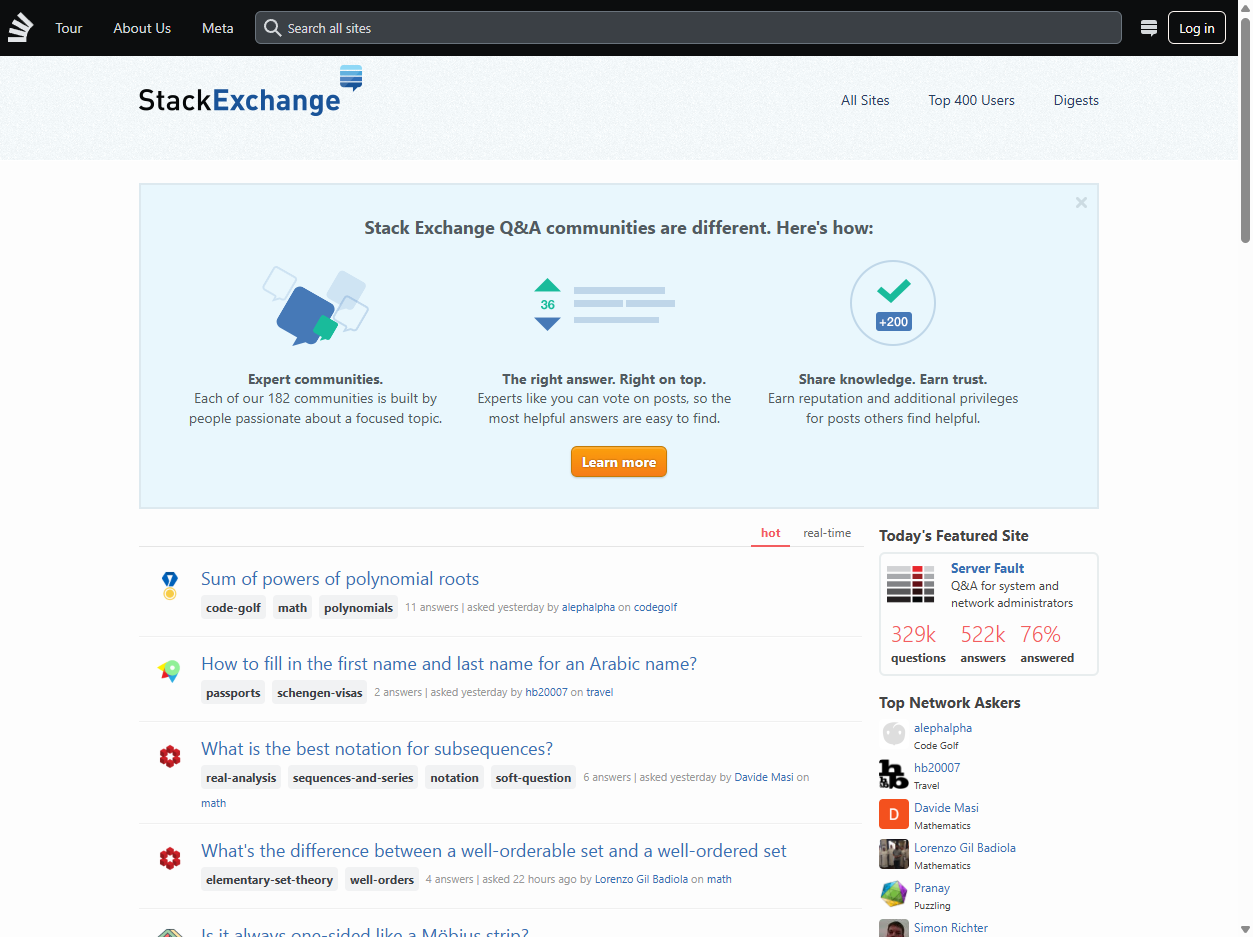
Stack Exchange is a network of question-and-answer websites. On StackExchange.com, people can browse focused communities, ask questions, answer other users, vote on useful posts, and search archives that cover programming, mathematics, science, language, hobbies, professional topics, and more.
Beyond Stack Overflow
Stack Overflow is the best-known site in the network, but Stack Exchange is broader. It includes communities for mathematics, server administration, academia, travel, English language, worldbuilding, cooking, history, and many other subjects, each with its own scope and norms.
Question-and-answer design
The format is intentionally structured. A good question should be answerable, specific, and on-topic for that community, while answers are expected to solve the problem or explain the issue clearly. Voting helps the best answers rise above weaker or less relevant responses.
Reputation and privileges
Users earn reputation when their questions and answers are voted up. As reputation grows, a user gains privileges such as commenting more broadly, editing posts, reviewing queues, or helping moderate the site, which turns community trust into practical governance.
Knowledge archive
Stack Exchange pages often become long-lived reference material. A well-answered question can keep helping people years later through search, especially when the answers are maintained, edited, commented on, or improved as tools and facts change.
Strengths and frictions
The network's strict scope rules can make answers cleaner and more searchable, but they can also feel unfriendly to new users who expect a discussion forum. The same moderation that keeps archives useful can make participation challenging when a question is unclear, duplicated, opinion-based, or outside a site's topic.
Why it matters
Stack Exchange helped define what high-signal web knowledge can look like: focused questions, peer-ranked answers, editable posts, and community moderation. Its archives shape how students, programmers, researchers, hobbyists, and professionals solve problems through search.