Trello
Trello is a visual work management website and app where people organize projects with boards, lists, cards, checklists, due dates, comments, attachments, and simple automation.
What Trello is
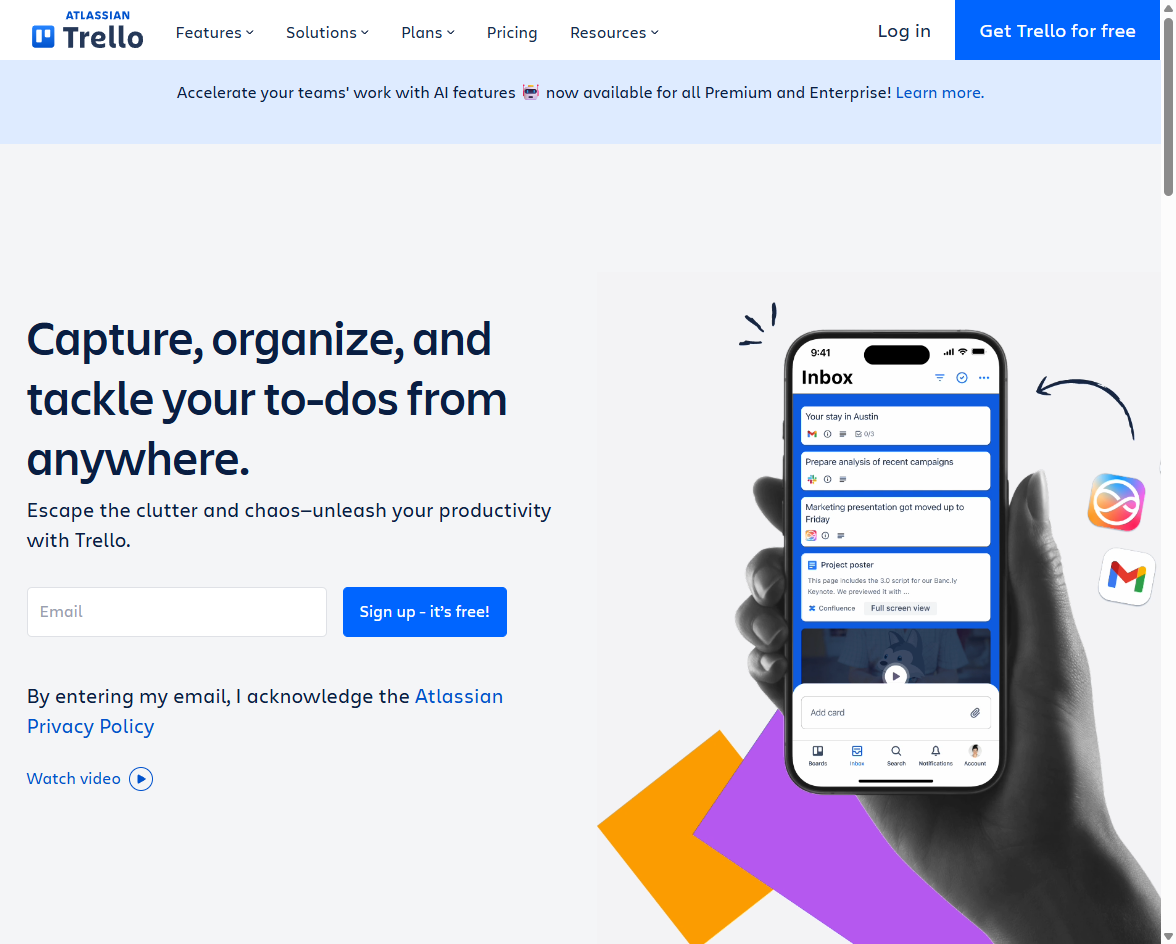
Trello is a visual work management website and app. On Trello.com, people create boards, organize work into lists, and move cards through stages such as To do, Doing, and Done while adding checklists, due dates, attachments, labels, comments, and members. The official Trello app is available on the App Store and Google Play.
.svg)

Boards, lists, and cards
A Trello board is the main workspace for a project or process. Lists usually represent stages, categories, or priorities, while cards represent tasks, ideas, requests, bugs, assets, or anything else the team wants to track.
Why it feels simple
Trello's appeal comes from making work visible without requiring a heavy project management setup. A board can start as a personal checklist and later grow into a shared workflow with assignments, due dates, attachments, templates, and automation.
Collaboration and automation
Team members can comment on cards, mention each other, attach files, subscribe to updates, and use views or filters to find work. Trello also includes automation features so repetitive actions, such as moving cards or adding checklist items, can happen from rules and buttons.
Part of Atlassian
Trello became part of Atlassian in 2017, joining products such as Jira, Confluence, and later Loom in Atlassian's collaboration portfolio. That connection matters because Trello can be used alone or alongside more structured software development and company planning tools.
Strengths and limits
Trello works especially well when the workflow is visible and card-based. It can become messy when boards grow without rules, when teams need complex dependencies, or when every department tries to force detailed reporting into a tool built for clarity and movement.
Why it matters
Trello helped popularize kanban-style work tracking for non-technical teams. Its card-and-board metaphor made project management feel accessible to students, creators, marketers, operations teams, startups, and anyone who wanted to see work move from idea to completion.
WHOIS domain data
Data pulled: May 24, 2026View current WHOIS record
- Domain
- trello.com
- IP address
- 3.167.56.112
- Registrar
- MarkMonitor Inc.
- WHOIS server
- whois.markmonitor.com
- Referral URL
- http://www.markmonitor.com
- Created
- August 20, 2004
- Updated
- April 12, 2026
- Expires
- June 1, 2027
- Nameservers
- ns-722.awsdns-26.net (205.251.194.210); ns-402.awsdns-50.com (205.251.193.146); ns-1442.awsdns-52.org (205.251.197.162); ns-2013.awsdns-59.co.uk (205.251.199.221)
- Domain status
- clientDeleteProhibited; clientTransferProhibited; clientUpdateProhibited
- DNSSEC
- signedDelegation
- Registrant contact
- Organization Atlassian Pty Ltd; address AU
- Registrant email
- Select Request Email Form at https://domains [dot] markmonitor [dot] com/whois/trello [dot] com
- Tech contact email
- Select Request Email Form at https://domains [dot] markmonitor [dot] com/whois/trello [dot] com