Udemy
Udemy is an online learning marketplace where instructors publish courses and learners study practical skills in technology, business, design, personal development, and other fields. Founded in 2010, it became known for a large instructor-led catalog, frequent course discounts, and Udemy Business training for organizations.
What Udemy is
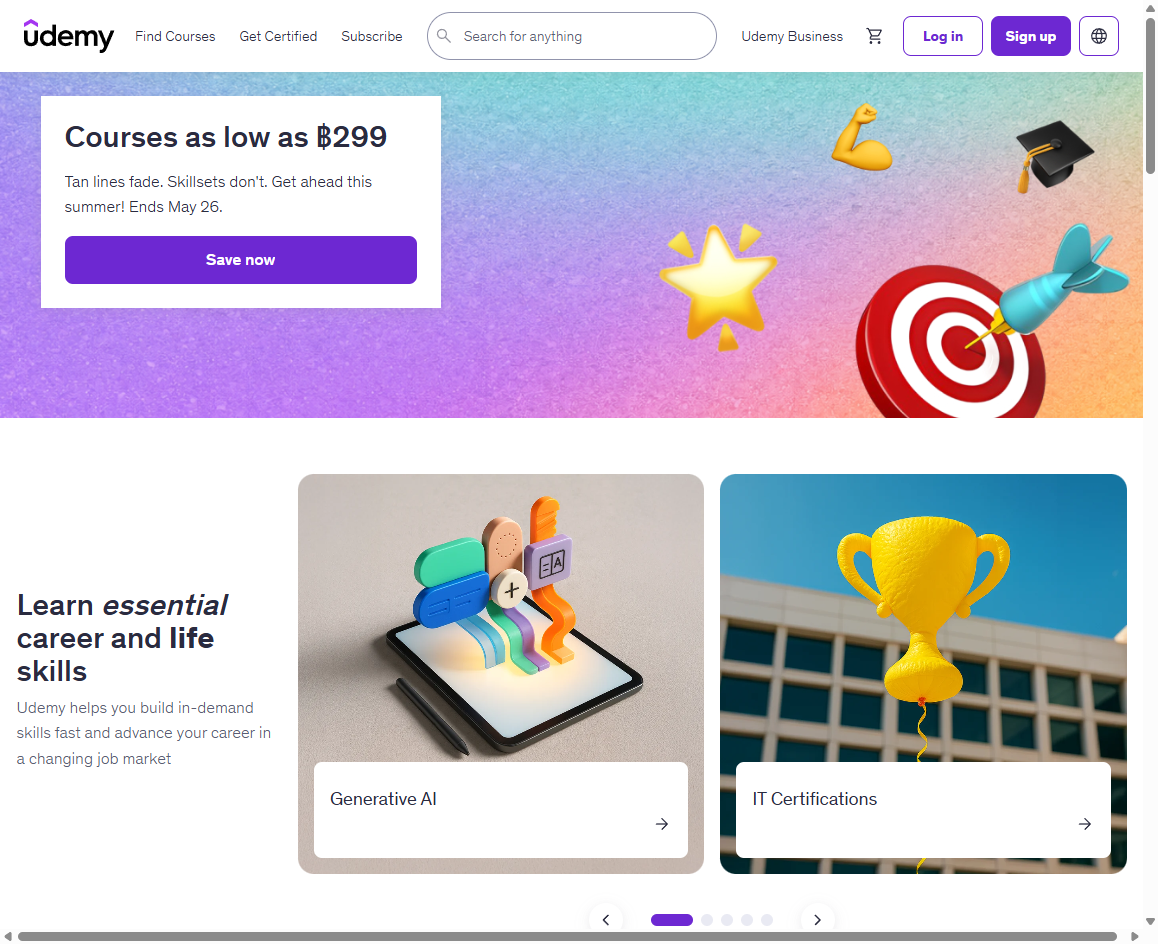
Udemy is an online course marketplace and skills-learning platform. On Udemy.com, learners can search for courses, watch video lessons, complete quizzes or exercises, download resources, and receive completion certificates, while instructors publish courses for a global audience.
Marketplace model
Unlike platforms built mainly around universities, Udemy grew around independent instructors and subject-matter experts. A course can be created by a software developer, designer, business coach, language teacher, or hobby specialist. That marketplace approach gives Udemy breadth, but it also makes course quality, teaching style, updates, and depth vary from course to course.
What learners use it for
Many people use Udemy for practical, job-adjacent learning: programming, data analysis, cloud tools, design software, project management, marketing, finance, language study, and personal productivity. The platform is often used for targeted skill building rather than full academic programs.
Prices and subscriptions
Udemy became famous for individual course purchases and frequent discounts. Over time it also added subscription-style access through personal plans and organizational products. The result is a mixed model: some learners buy a single course, some subscribe, and some access a curated catalog through an employer or school.
Udemy Business
Udemy Business is the company's workplace learning product. Employers use it to give teams access to courses, learning paths, analytics, and skills training in areas such as technology, leadership, business operations, and AI adoption. This made Udemy not only a consumer course site, but also a corporate learning platform.
Coursera combination
On May 11, 2026, Coursera announced that it had completed its combination with Udemy. The companies described the deal as a way to connect Coursera's university and credential strengths with Udemy's large instructor marketplace. Coursera also said there were no immediate day-one changes to learner access, pricing, subscriptions, instructor agreements, or course availability.
Why it matters
Udemy matters because it helped make online teaching feel open to almost anyone with useful expertise. It expanded access to affordable skills training, but it also raised questions about marketplace quality control, instructor economics, certificate value, course freshness, and how learning platforms should adapt when AI can both help teach and disrupt the skills people are learning.