Yelp
Yelp is a local search and review platform where people find restaurants, shops, home services, nightlife, beauty businesses, healthcare offices, and other local businesses through ratings, written reviews, photos, menus, maps, quotes, and business information. Founded in 2004 by Jeremy Stoppelman and Russel Simmons, it helped make online word-of-mouth a major force in local discovery and small-business reputation.
What Yelp is
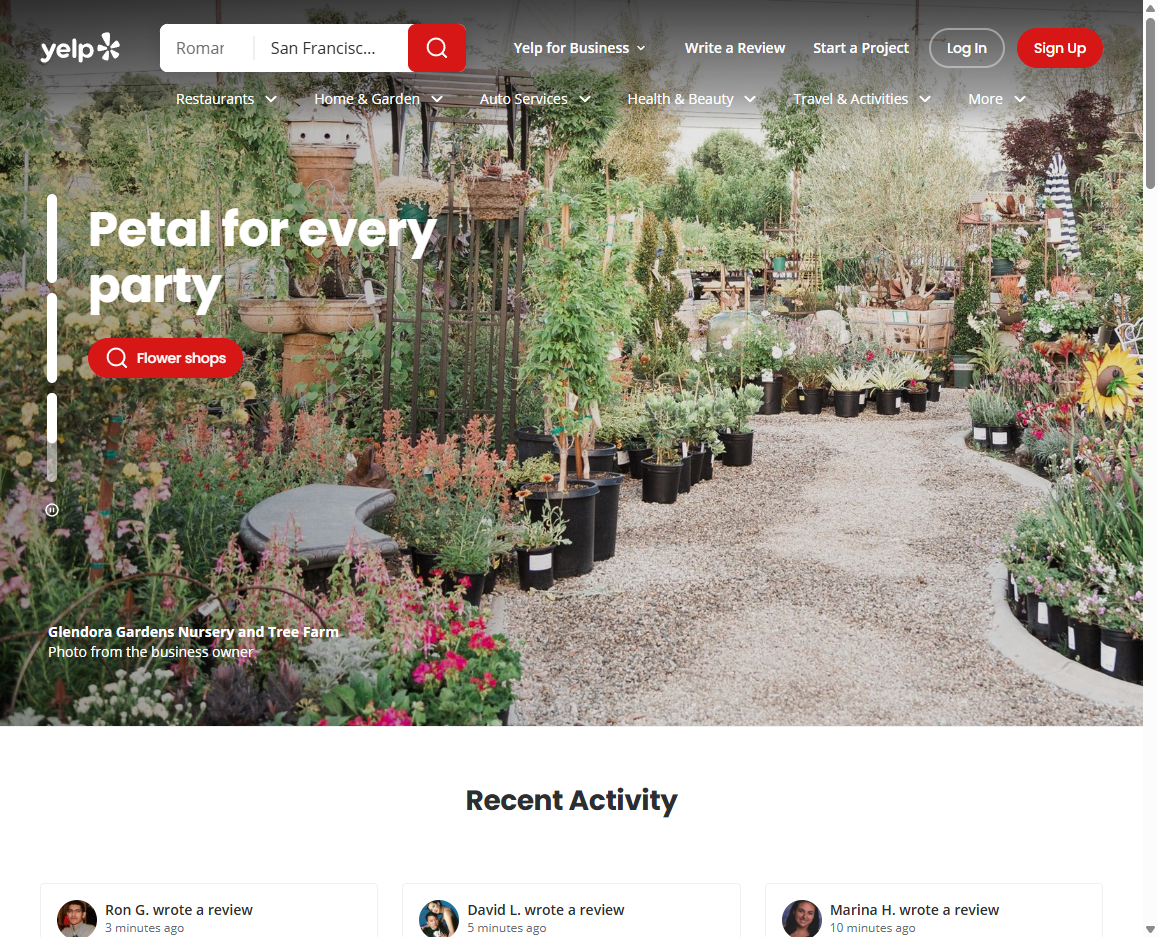
Yelp is a local business discovery and review site. On Yelp.com, a business page can combine star ratings, written reviews, photos, location details, hours, menus, service options, contact links, and sometimes quote or reservation tools. The official Yelp app is available on the App Store and Google Play.
.svg)

Online word of mouth
Yelp turned everyday local recommendations into searchable public data. Instead of asking only friends or reading a phone book listing, people could compare many experiences at once, especially for restaurants, cafes, dentists, plumbers, salons, mechanics, and neighborhood services.
Written reviews matter
Yelp emphasizes written reviews alongside star ratings. A score gives a quick signal, but the text explains what happened: service, price, cleanliness, wait time, food quality, communication, accessibility, or whether a business handled a problem well. That detail is what makes reviews useful and controversial.
Recommendation software
Not every review affects a businessโ€s displayed rating. Yelp uses recommendation software to decide which reviews are shown more prominently and included in the rating count, based on signals of quality, reliability, and user activity. This system is meant to fight manipulation, but it has long been debated by business owners and reviewers.
Business pages and ads
Businesses can claim pages, update information, add photos, respond to reviews, answer messages, and buy advertising or lead-generation products. Yelpโ€s business model depends heavily on connecting local businesses with people who are ready to choose where to eat, shop, book, or hire.
Trust and safety
Review platforms attract manipulation because ratings can affect revenue. Yelp reports work against paid reviews, fake accounts, suspicious review rings, conflicts of interest, harassment, and deceptive business behavior. The challenge is keeping reviews open enough to be useful while limiting abuse that can hurt consumers or businesses.
Rise and pressure
Yelp rose by owning a strong niche in local reviews before smartphones made nearby search routine. Its pressure now comes from Google Maps, Apple Maps, social video, delivery apps, reservation platforms, AI answer engines, and the fact that many users expect local answers directly inside search results.
Why it matters
Yelp matters because local reputation is high-stakes. A few visible reviews can influence where people spend money and how small businesses are judged. The platform shows how online communities, algorithms, ads, and trust systems reshape neighborhood commerce.
WHOIS domain data
Data pulled: May 24, 2026View current WHOIS record
- Domain
- yelp.com
- IP address
- 146.75.32.116
- Registrar
- MarkMonitor Inc.
- WHOIS server
- whois.markmonitor.com
- Referral URL
- http://www.markmonitor.com
- Created
- December 12, 2003
- Updated
- November 10, 2025
- Expires
- December 12, 2027
- Nameservers
- dns1.p06.nsone.net (198.51.44.6); dns2.p06.nsone.net (198.51.45.6); dns3.p06.nsone.net (198.51.44.70); dns4.p06.nsone.net (198.51.45.70); ns01.midtowndoornailns.com (45.54.54.1); ns02.midtowndoornailns.com (45.54.54.65); ns03.midtowndoornailns.com (45.54.54.129); ns04.midtowndoornailns.com (45.54.54.193)
- Domain status
- clientDeleteProhibited; clientTransferProhibited; clientUpdateProhibited
- Registrant contact
- Organization Yelp Inc.; address US
- Registrant email
- Select Request Email Form at https://domains [dot] markmonitor [dot] com/whois/yelp [dot] com
- Tech contact email
- Select Request Email Form at https://domains [dot] markmonitor [dot] com/whois/yelp [dot] com