Bluesky
Bluesky is a social networking app and website built around short public posts, custom feeds, moderation tools, and the AT Protocol for a more open social web.
What Bluesky is
Bluesky is a social networking app and website for short public posts, follows, replies, reposts, and community conversation. On Bluesky, people can create an account, follow other users, read algorithmic or custom feeds, and participate in a microblogging-style network. Official mobile listings are available as Bluesky Social on the App Store and Bluesky on Google Play.
.svg)

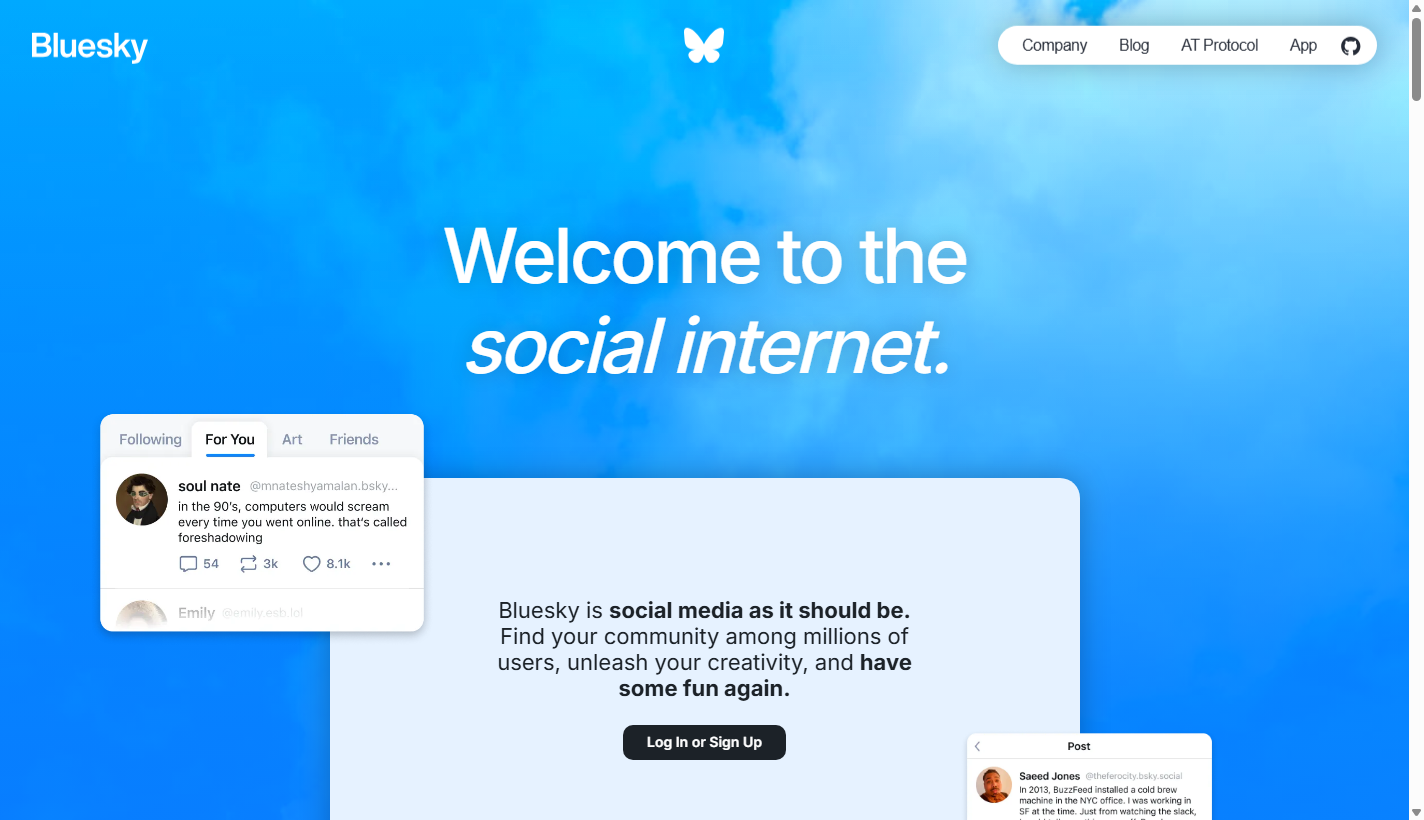
The social internet pitch
Bluesky presents itself as social media that should not be locked inside one companyโ€s closed system. Its public site frames the product around user choice, community discovery, creativity, and an open foundation for online conversation.
AT Protocol
The technical idea behind Bluesky is the AT Protocol, also called atproto. Blueskyโ€s developer documentation describes it as a standard for public conversation and an open-source framework for building social apps. The protocol is meant to support portable identity, linked data, and services that can interoperate rather than depend on one app forever.
Feeds and discovery
One of Blueskyโ€s distinctive features is its feed model. Users can follow accounts directly, but they can also subscribe to custom feeds that organize posts around topics, communities, ranking logic, or moderation choices. That makes discovery feel less tied to one opaque default algorithm.
Moderation and labels
Bluesky separates some moderation functions into labels, filters, user controls, and service-level policies. The goal is not to remove moderation from social media, but to make more of it visible, composable, and adjustable so different communities can make different choices about what they see.
Competition and identity
Bluesky is often compared with X, Mastodon, Threads, and other public conversation platforms. Its identity sits between familiar social networking and protocol experimentation: it needs a simple app people enjoy using, while also proving that open social infrastructure can work at scale.
Why it matters
Bluesky matters because it is a mainstream attempt to rebuild social networking around portability, user choice, and open protocols. Whether or not it becomes the dominant public square, it has pushed more people to ask who controls feeds, identity, moderation, and data in online social life.
WHOIS domain data
Data pulled: May 24, 2026View current WHOIS record
- Domain
- bsky.app
- WHOIS lookup result
- Who.is returned no public WHOIS data rows for bsky.app at pull time.
- RDAP registrar
- Squarespace Domains II LLC.
- Created
- September 27, 2022
- Updated
- October 10, 2025
- Expires
- September 27, 2028
- Nameservers
- ns-1425.awsdns-50.org; ns-2001.awsdns-58.co.uk; ns-372.awsdns-46.com; ns-757.awsdns-30.net
- Domain status
- client delete prohibited; client transfer prohibited
- DNSSEC
- delegationSigned false; zoneSigned true