Mastodon
Mastodon is a decentralized social networking platform where people join independently run servers that can communicate across a federated network.
What Mastodon is
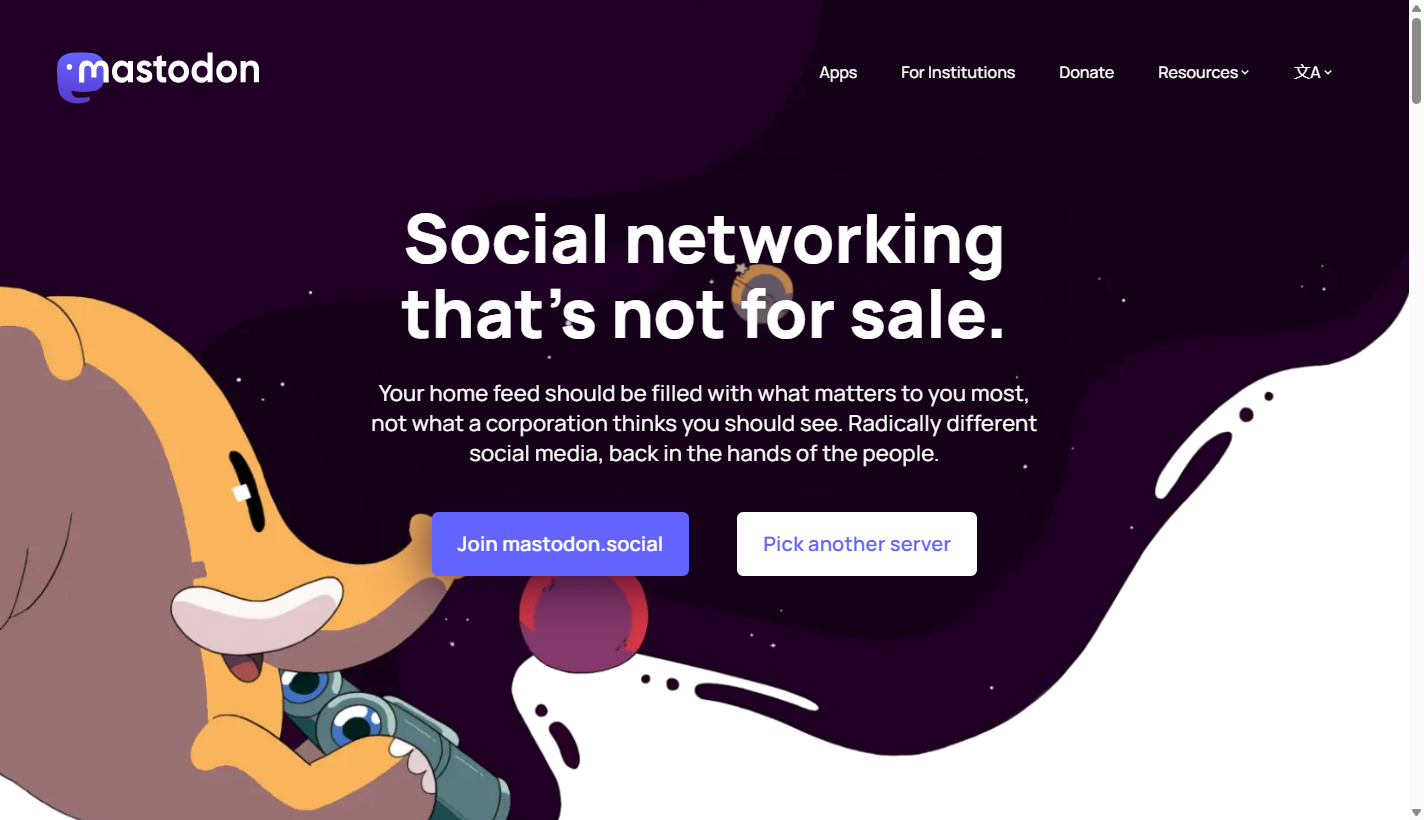
Mastodon is decentralized social networking software and a public network of compatible servers. On JoinMastodon.org, people can learn how Mastodon works, join a recommended server such as mastodon.social, pick another community server, or download official apps.
Servers instead of one platform
A Mastodon account lives on a server, sometimes called an instance. That server has its own address, rules, moderators, community norms, and local timeline. People on different servers can still follow, reply to, boost, and mention one another when their servers federate.
The fediverse idea
Mastodon is part of the fediverse, a broader network of services that use open social web protocols such as ActivityPub. The important shift is that a social profile is not trapped inside one companyโ€s app. Compatible servers can exchange posts and identity signals across organizational boundaries.
Timelines and posting
Mastodon looks familiar to people who know microblogging: profiles, short posts, replies, follows, hashtags, media, boosts, favorites, and direct mentions. Its design also differs from mainstream social platforms by emphasizing chronological timelines, content warnings, server-level moderation, and fewer built-in growth mechanics.
Moderation and governance
The server model makes moderation local. A server can choose rules, block abusive accounts, limit other servers, or defederate from communities it considers unsafe. This gives communities more control, but it also creates complexity because the user experience depends heavily on which server someone joins and how servers relate to each other.
Rise after Twitter shocks
Mastodon existed for years before it became widely discussed. Interest surged whenever users looked for alternatives to corporate social media, especially during major Twitter changes and ownership turmoil. Those waves brought attention, new users, server strain, usability criticism, and more public understanding of decentralized social media.
Why it matters
Mastodon matters because it makes social networking feel more like email or the web: many providers, shared standards, and communities with different rules. It is not a drop-in replacement for every mainstream platform, but it keeps alive the idea that public conversation can be built on interoperable infrastructure rather than one companyโ€s feed.