Fandom
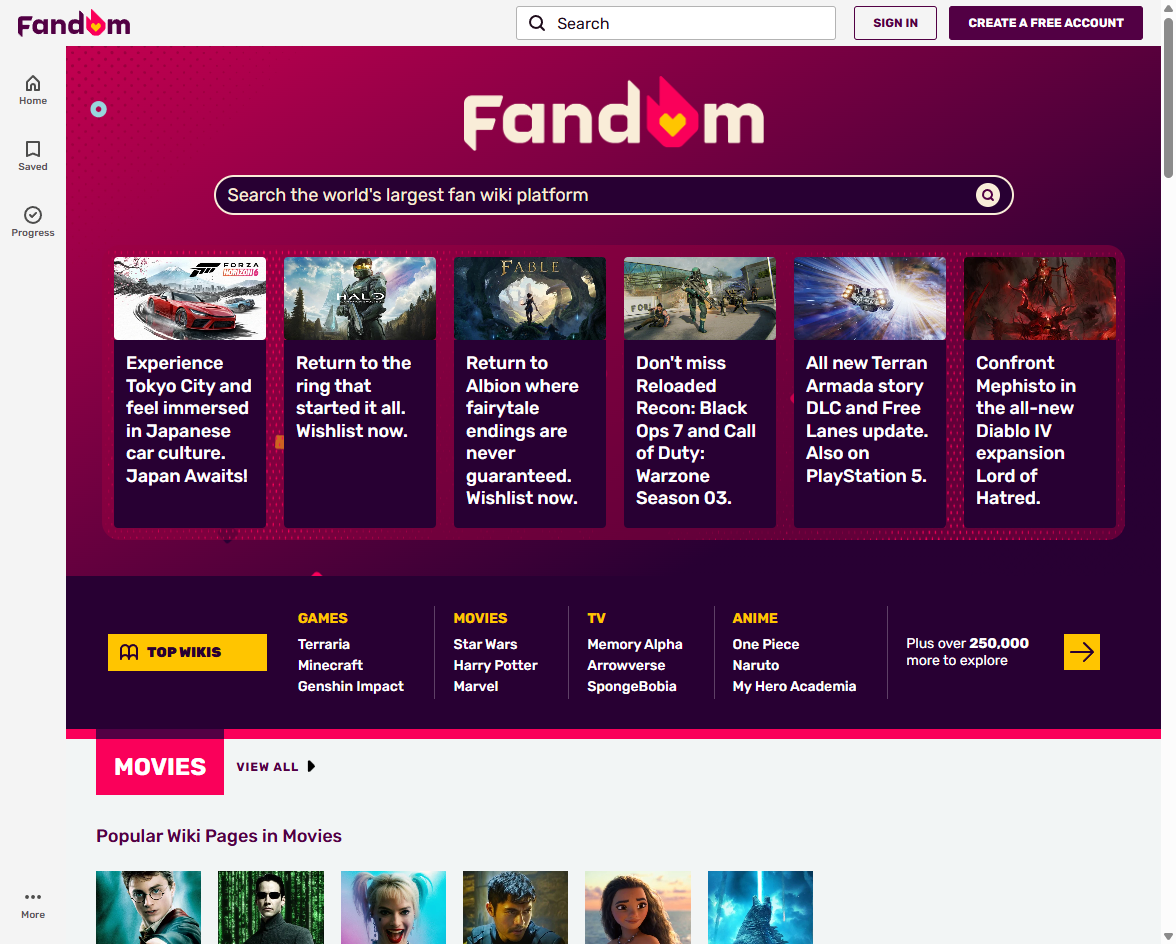
Fandom is a large fan wiki and entertainment platform where communities document games, movies, television, books, characters, lore, episodes, releases, and fan knowledge in collaborative pages.
What Fandom is
Fandom is a fan wiki and entertainment website. On Fandom.com, communities create and maintain pages about fictional worlds, games, characters, episodes, releases, mechanics, timelines, and trivia, often turning scattered fan knowledge into searchable reference material.
From Wikia to Fandom
The site began in 2004 as Wikicities, a commercial wiki-hosting project connected to the same collaborative editing culture that made Wikipedia famous. It later became Wikia, then shifted toward the Fandom name as entertainment and gaming communities became its main identity.
How fan wikis work
A Fandom wiki is usually built by volunteer contributors around one subject. Editors add pages, categories, infoboxes, images, references, and discussion pages so readers can look up details that may be too specific for a general encyclopedia or a publisher's official site.
Why it appears in search
Fandom pages often rank highly because they are detailed, heavily linked, and focused on the exact questions fans search for. A player looking for a quest item, a viewer checking an episode order, or a reader tracing a character can land on a Fandom page before finding a studio, developer, or publisher page.
Business and tradeoffs
Fandom is a for-profit platform, so advertising, video, sponsored media, and publisher partnerships sit beside community-edited reference work. That model helps support a huge hosting network, but it also creates tension when contributors want cleaner pages, more control, or a less commercial home for their communities.
Community ownership questions
A recurring issue is whether a fan wiki should stay on a large platform or move to an independent site. Fandom offers visibility and infrastructure, while independent wikis can offer more control over design, policies, ads, moderation, and official relationships with creators.
Why it matters
Fandom shows how much of the useful web is built by specialized communities rather than formal publishers. Its pages can become the working memory of a game, show, or fictional universe, shaping how fans learn, debate canon, solve problems, and keep older media discoverable.