Intercom
Intercom is a popular customer service website for AI-assisted support, helpdesk workflows, customer conversations, automation, knowledge bases, and support reporting.
What Intercom is
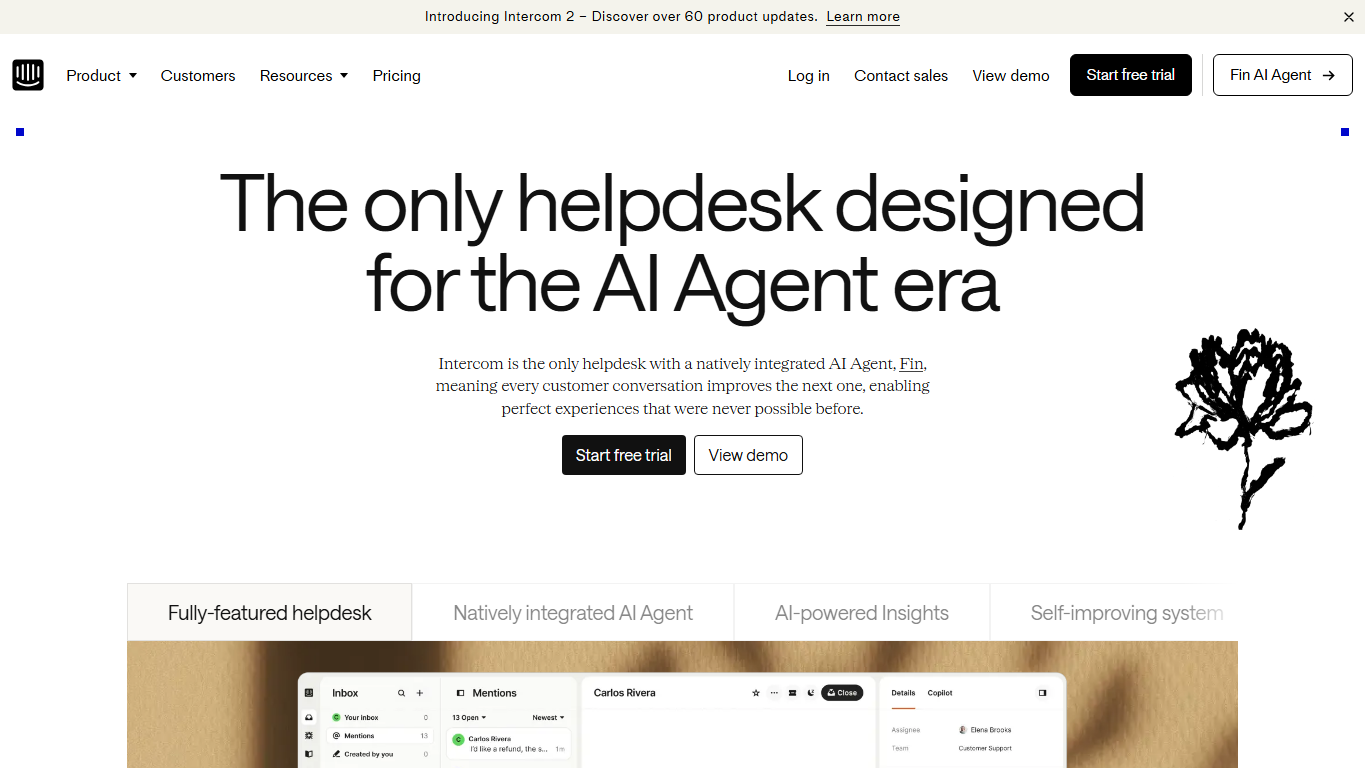
intercom.com is the official website for Intercom, a customer service platform built around AI-assisted support, helpdesk workflows, customer conversations, tickets, help centers, automation, and reporting. The site explains Intercom's products, pricing, integrations, app marketplace, resources, and account access. Teams often evaluate Intercom when they want one place to combine live support, self-service answers, and automated customer communication.
Inbox, tickets, and conversations
Intercom is closely associated with customer conversations that start from web messengers, apps, email, and other support channels. The helpdesk inbox gives support teams a shared place to triage, assign, reply to, and track those conversations. Ticketing features help teams handle issues that need investigation, escalation, ownership, due dates, or a longer workflow than a quick chat reply.
AI agent and automation
A major part of Intercom's current positioning is AI support. The platform can help answer common questions, guide customers to useful resources, summarize or route conversations, and assist support agents while they work. Automation is most useful when a team has clean knowledge content, clear escalation rules, and a shared view of when a human should take over.
Help center and knowledge
Intercom's help center and knowledge tools support self-service customer education. A team can publish articles, organize answers, reuse knowledge in support workflows, and keep common explanations consistent. This reduces repeated manual replies, but it also creates an editorial responsibility: stale or vague help content can make automation less reliable and customers more frustrated.
Customer context and reporting
Customer service teams need context as well as messages. Intercom can connect conversations with customer records, company information, segments, behavior, tags, and team notes. Reporting helps leaders review response times, workload, resolution patterns, automation impact, and support quality. Those signals can influence staffing, product fixes, onboarding material, and customer success priorities.
Who uses Intercom
Intercom is used by support teams, customer experience groups, startups, SaaS companies, product-led businesses, sales teams, customer success teams, and operations leaders that manage high volumes of customer communication. Smaller teams may use it to replace scattered inboxes and chat tools. Larger teams may use it for routing, permissions, reporting, AI assistance, knowledge management, and integration with CRM or data systems.
Pricing and setup choices
Intercom pricing and setup depend on team size, seats, support volume, AI usage, helpdesk features, integrations, data needs, and service expectations. A useful evaluation looks beyond the monthly plan price. Teams should map which channels they will support, how many agents need access, which questions can be automated, what customer data will be connected, and how the system will fit alongside CRM, product analytics, email, and internal collaboration tools.
Strengths and cautions
Intercom's strength is bringing customer conversations, help content, automation, AI support, and team workflows into a single support environment. The caution is that a powerful helpdesk can expose messy processes. Poor routing, outdated articles, unclear ownership, or over-automation can make support feel impersonal. Teams get better results when they design handoffs, measure customer outcomes, and keep knowledge content maintained.
Why it matters
Customer service is often where people decide whether a product feels trustworthy. Intercom matters because it treats support as a product experience, not just a queue of messages. Its website is also a useful reference point for how modern support platforms are blending AI agents, human agents, help centers, ticketing, and customer data into one operating system for customer communication.
WHOIS domain data
Data pulled: May 20, 2026View current WHOIS record
- Domain
- intercom.com
- IP address
- 18.160.41.123
- Registrar
- Amazon Registrar, Inc.
- WHOIS server
- whois.registrar.amazon
- Referral URL
- http://registrar.amazon.com
- Created
- December 14, 1993
- Updated
- November 8, 2025
- Expires
- December 13, 2026
- Nameservers
- ns-895.awsdns-47.net (205.251.195.127); ns-1093.awsdns-08.org (205.251.196.69); ns-315.awsdns-39.com (205.251.193.59); ns-1716.awsdns-22.co.uk (205.251.198.180)
- Domain status
- clientDeleteProhibited; clientTransferProhibited; clientUpdateProhibited
- DNSSEC
- unsigned
- Contact privacy
- Registrant and technical contact details are listed through Identity Protection Service on behalf of intercom.com owner.