Zoho
Zoho is a popular business software website for cloud apps across sales, marketing, email, finance, HR, IT, collaboration, analytics, low-code tools, and the Zoho One suite.
What Zoho is
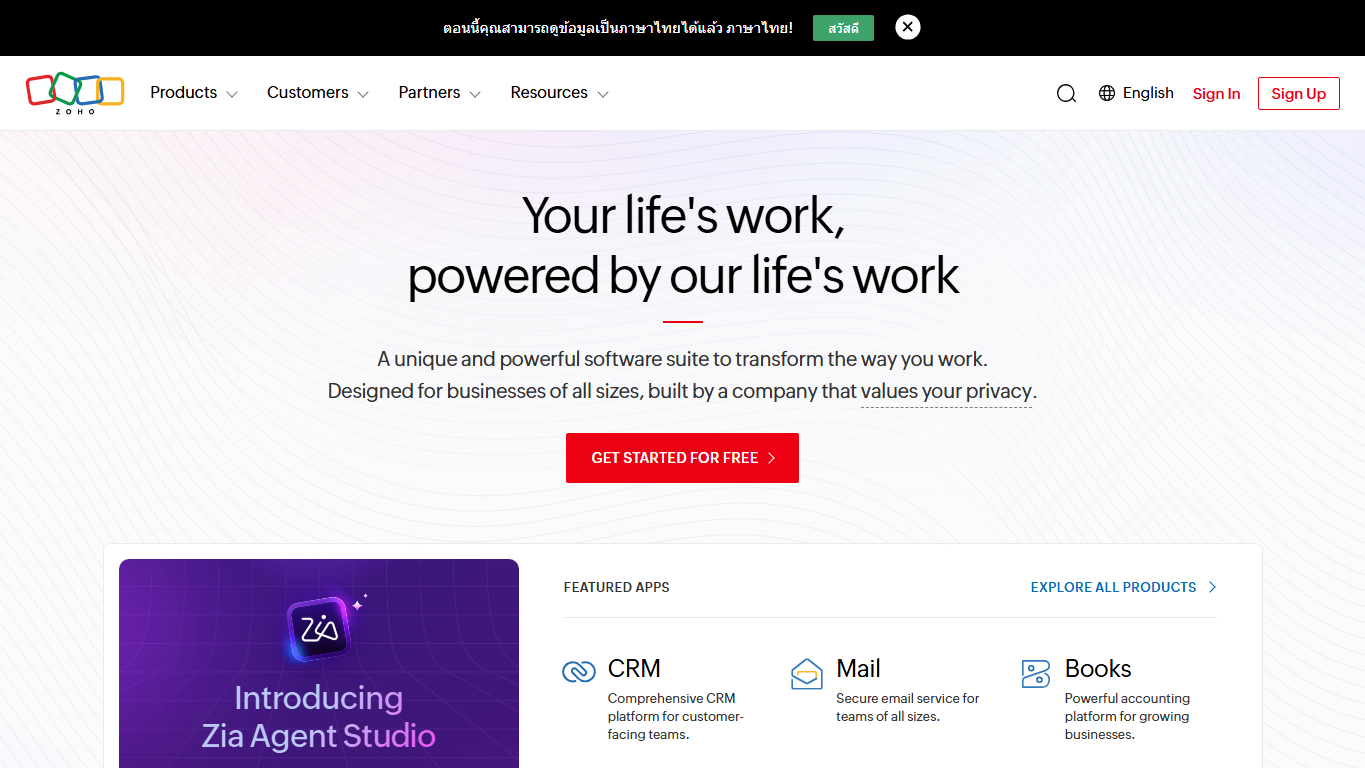
zoho.com is the official website for Zoho, a cloud software company known for a broad suite of business applications. People visit Zoho to compare apps for customer relationship management, email, finance, human resources, support, analytics, low-code development, collaboration, and operations. The website works as both a product catalog and an entry point for pricing, trials, account sign-in, documentation, support, and regional business software information.
A broad app suite
Zoho is less a single-purpose website than a large ecosystem of connected tools. Its product directory groups apps for sales, marketing, customer service, finance, human resources, legal operations, productivity, project management, analytics, developer workflows, and commerce. That breadth is central to Zoho's appeal: a business can start with one app, such as CRM, Mail, Books, Desk, Projects, Creator, Analytics, Campaigns, People, Inventory, or Social, and later add adjacent tools without leaving the same vendor family.
Zoho One
Zoho One is the company's bundled suite for organizations that want many business apps under one subscription and administration model. Zoho presents it as an operating system for business because it combines apps for sales, marketing, support, finance, collaboration, productivity, analytics, and custom application building. The practical value is consolidation: teams can reduce separate vendor contracts, centralize user management, and connect data across more workflows.
Sales, marketing, and support
Many visitors know Zoho through customer-facing tools. Zoho CRM supports sales pipelines, account records, automation, and reporting. Marketing and engagement products help teams build campaigns, forms, surveys, landing pages, social publishing, webinars, chat, and customer journeys. Support teams can use help desk, knowledge base, and service tools to track tickets, measure response times, and keep customer history close to sales and marketing data.
Finance, operations, and HR
Zoho also has a strong back-office footprint. Finance and operations apps cover accounting, invoicing, expenses, subscriptions, inventory, payroll in supported regions, and order workflows. Human resources products support employee records, recruiting, attendance, performance, and workplace processes. For smaller organizations, this can make Zoho attractive because front-office and back-office work can be assembled from one software family instead of many unrelated subscriptions.
Email, collaboration, and IT
Zoho includes workplace tools for email hosting, team chat, meetings, documents, file storage, project work, password management, remote assistance, and IT-related administration. These tools matter for companies that want daily communication, document sharing, and operational controls inside the same account ecosystem as their CRM or finance stack. They also make Zoho a frequent comparison point against larger productivity suites.
Who uses Zoho
Zoho is used by founders, small business owners, sales teams, marketing teams, finance teams, HR departments, support desks, agencies, consultants, nonprofits, education teams, and distributed companies that want cloud software without assembling every workflow from separate vendors. Larger organizations may use Zoho for specific departments, regional operations, custom internal apps, or teams that need a flexible alternative to heavier enterprise platforms.
Pricing and deployment choices
Zoho pricing varies by product, edition, user count, billing term, region, storage, automation limits, support level, and included features. Buyers often compare whether they should subscribe to individual apps, adopt Zoho One, or mix Zoho with tools they already use. The official pricing pages are important because product bundles, free tiers, trial terms, taxes, and regional availability can change over time.
Why it matters
Zoho matters because it gives businesses a large, relatively integrated software catalog under one brand. That can simplify purchasing and administration, especially for teams that want CRM, email, accounting, support, analytics, and custom workflows to share a common account system. The tradeoff is that buyers should evaluate the exact apps they need, migration effort, regional compliance requirements, integrations, support expectations, and whether an all-in-one suite is better than best-of-breed tools for their workflow.
WHOIS domain data
- Domain
- zoho.com
- Registrar
- MarkMonitor Inc.
- WHOIS server
- whois.markmonitor.com
- Referral URL
- http://www.markmonitor.com
- Created
- January 16, 2004
- Updated
- October 23, 2025
- Expires
- January 16, 2031
- IP address
- 204.141.42.155
- Nameservers
- pdns90.ultradns.biz, pdns90.ultradns.com, pdns90.ultradns.net, ns1.zohocorp.com, ns11.zns-53.com, ns21.zns-53.net, ns31.zns-53.com, ns41.zns-53.net
- Domain status
- clientDeleteProhibited, clientTransferProhibited, clientUpdateProhibited
- DNSSEC
- unsigned
- Registrant organization
- ZOHO Corporation Private Limited
- Registrant country
- IN
- Source
- https://who.is/whois/zoho.com