Signal
Signal is a popular private messaging service and website built around end-to-end encrypted chats, voice calls, video calls, groups, and a nonprofit model that avoids ads and trackers.
What Signal is
Signal is a private messaging app and website for encrypted communication. On Signal.org, people can download the app, learn about its privacy model, read official updates, and find links for mobile and desktop versions.
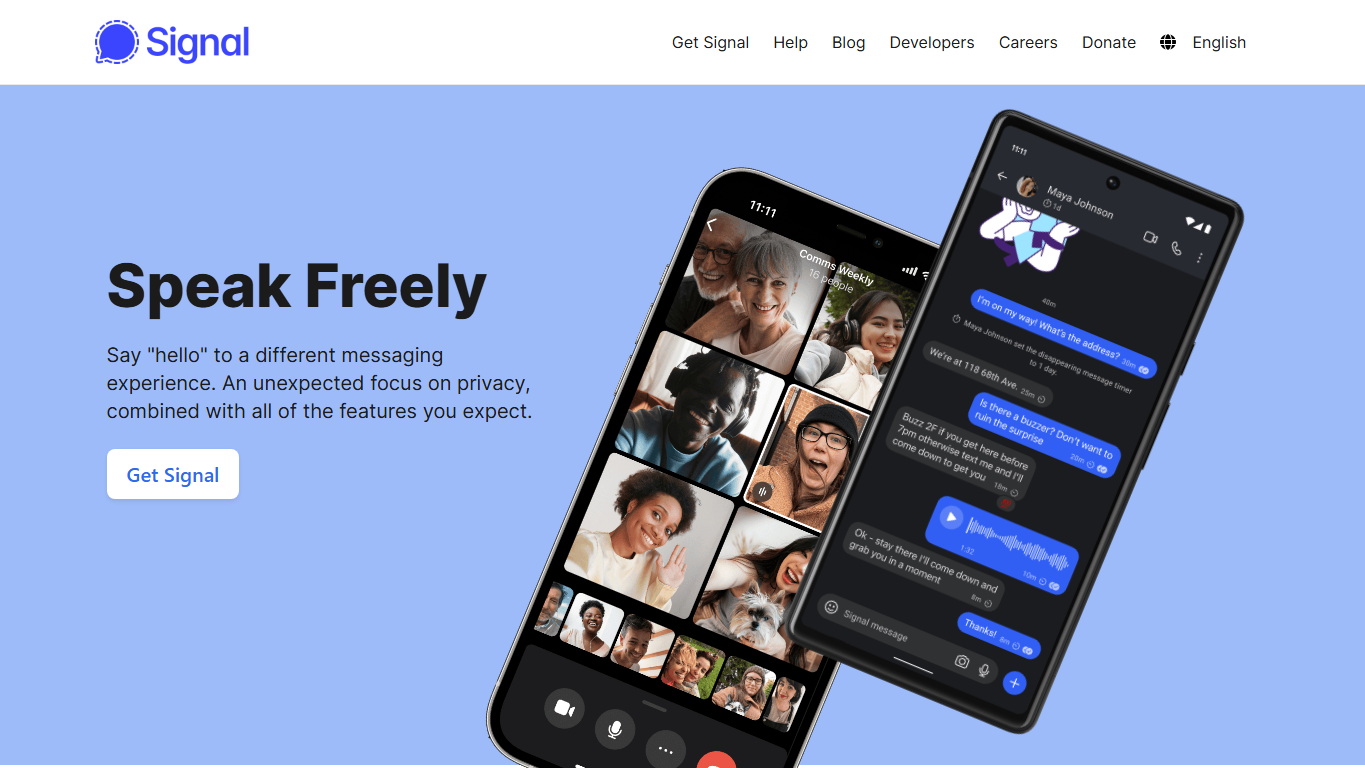
Messaging and calls
Signal supports one-to-one chats, group conversations, voice messages, file sharing, stickers, voice calls, and video calls. The app is designed for everyday communication, not only high-risk security work, so it has many familiar chat features while keeping privacy central to the experience.
Privacy by default
Signal emphasizes end-to-end encryption and a design that avoids advertising and tracking. Its public message is that private communication should not require a special mode or extra setup; the normal way to use Signal is also the private way to use Signal.
Nonprofit structure
Signal says it is an independent nonprofit supported by grants and donations. That matters because the service does not depend on ad targeting, affiliate marketing, or selling user attention as its basic business model.
Who uses Signal
Signal is used by friends, families, journalists, activists, lawyers, researchers, public-interest organizations, technology workers, and privacy-conscious users who want a familiar messenger with stronger defaults. The mix is broad: some people use it for ordinary daily chats, while others use it because the privacy guarantees are central to their work.
Apps and devices
Signal is primarily a mobile messenger, with official downloads for Android and iOS plus a desktop app. Like many secure messaging tools, it balances convenience with account and device rules, so users should keep recovery, device linking, and backups in mind before relying on it for important conversations.
Tradeoffs
Signal is strong on private messaging, but it is not a magic privacy shield. People can still screenshot conversations, compromise their own devices, reveal messages voluntarily, or lose access through account and backup mistakes. Security depends on the app, the devices, the people using it, and the surrounding threat model.
Why it matters
Signal matters because it helped make strong encryption usable for ordinary communication. It gives people a mainstream way to message without ads or behavioral tracking, and it keeps public pressure on larger messaging platforms to treat private communication as a default expectation.
WHOIS domain data
Data pulled: May 20, 2026View current WHOIS record
- Domain
- signal.org
- IP address
- 104.18.11.47
- Registrar
- MarkMonitor Inc.
- WHOIS server
- whois.markmonitor.com
- Referral URL
- http://www.markmonitor.com
- Created
- April 15, 2001
- Updated
- June 3, 2025
- Expires
- April 15, 2028
- Nameservers
- casey.ns.cloudflare.com (108.162.195.158); zita.ns.cloudflare.com (172.64.32.243)
- Domain status
- clientDeleteProhibited; serverDeleteProhibited; clientTransferProhibited; serverTransferProhibited; clientUpdateProhibited; serverUpdateProhibited
- DNSSEC
- signedDelegation
- Registrant organization
- DNStination Inc.