The Guardian
The Guardian is a global news website and media organization that moved a historic newspaper brand into digital reporting, commentary, live blogs, podcasts, newsletters, and reader-funded journalism.
What The Guardian is
The Guardian is a news website and media organization. On TheGuardian.com, readers can follow breaking news, politics, world affairs, opinion, sport, culture, lifestyle, live coverage, newsletters, podcasts, and reader-supported journalism. Official mobile listings are available as The Guardian - US & World News on the App Store and The Guardian on Google Play.
.svg)

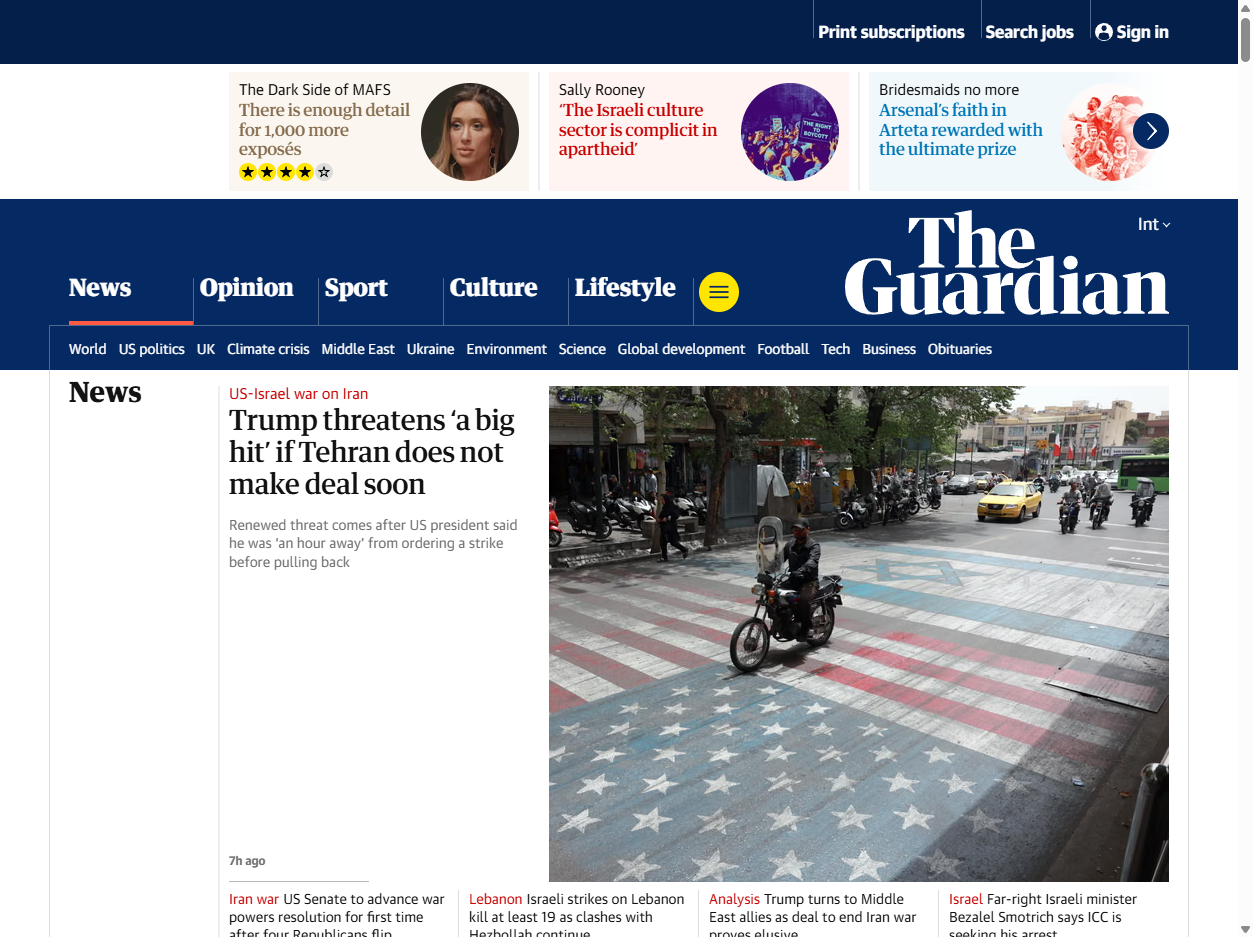
Digital newspaper and live news site
The Guardian still carries the habits of a newspaper: edited sections, headlines, investigations, columns, reviews, obituaries, and photo-led storytelling. Online, those habits sit beside live blogs, rolling updates, explainers, newsletters, podcasts, video, alerts, and search-friendly topic pages that can be updated throughout the day.
Reader-supported journalism
The site is known for asking readers to contribute voluntarily instead of putting all journalism behind a hard paywall. That approach keeps many articles open while still turning loyal readers into a major source of revenue. It also makes the relationship between trust, independence, and reader habit central to the siteโ€s business.
Opinion, culture, and lifestyle
The Guardian is not only a breaking-news destination. Its opinion pages, long reads, film and music criticism, books coverage, food writing, lifestyle sections, and sports reporting shape how many readers encounter politics and culture together. The mix makes the homepage feel less like a wire feed and more like a broad editorial publication.
Independence and ownership
The Guardian is part of Guardian Media Group and is ultimately owned by the Scott Trust. This ownership structure is often described as a way to protect editorial independence and keep the organization focused on journalism rather than short-term shareholder returns. Independence still depends on editorial judgment, transparency, funding, and public trust.
Rise from newspaper to global website
The Guardian began in Manchester in the nineteenth century, became a national British newspaper, and then built a large online audience outside the United Kingdom. Its digital rise came from open access, distinctive commentary, international editions, live coverage, searchable archives, and stories that traveled through search engines and social platforms.
Why it matters
The Guardian shows how old newspaper institutions adapted to the web without becoming only aggregators or social feeds. It also shows the pressure modern journalism faces: platform traffic can shift, misinformation competes for attention, advertising is unstable, and readers increasingly decide which newsrooms they want to support directly.
WHOIS domain data
Data pulled: May 24, 2026View current WHOIS record
- Domain
- theguardian.com
- IP address
- 151.101.193.111
- Registrar
- GoDaddy.com, LLC
- WHOIS server
- whois.godaddy.com
- Referral URL
- http://www.godaddy.com
- Created
- July 5, 1994
- Updated
- July 5, 2025
- Expires
- July 4, 2026
- Nameservers
- dns1.p04.nsone.net (198.51.44.4); dns2.p04.nsone.net (198.51.45.4); dns3.p04.nsone.net (198.51.44.68); dns4.p04.nsone.net (198.51.45.68); ns01.theguardiandns.com (45.54.51.1); ns02.theguardiandns.com (45.54.51.65); ns03.theguardiandns.com (45.54.51.129); ns04.theguardiandns.com (45.54.51.193)
- Domain status
- clientDeleteProhibited; clientRenewProhibited; clientTransferProhibited; clientUpdateProhibited
- Registrant contact
- Registration Private, Domains By Proxy, LLC; Tempe, Arizona, US; phone +1.4806242599; email via GoDaddy contact-domain-owner form
- Technical contact
- Registration Private, Domains By Proxy, LLC; Tempe, Arizona, US; phone +1.4806242599; email via GoDaddy contact-domain-owner form
- DNSSEC
- unsigned