Letterboxd
Letterboxd is a social website and app for logging films, rating and reviewing movies, building watchlists, following friends, making lists, and discovering what to watch next. Founded by film fans in 2011, it became a central online home for cinephile culture by combining a personal movie diary with social feeds, criticism, memes, lists, festival buzz, and recommendation habits.
What Letterboxd is
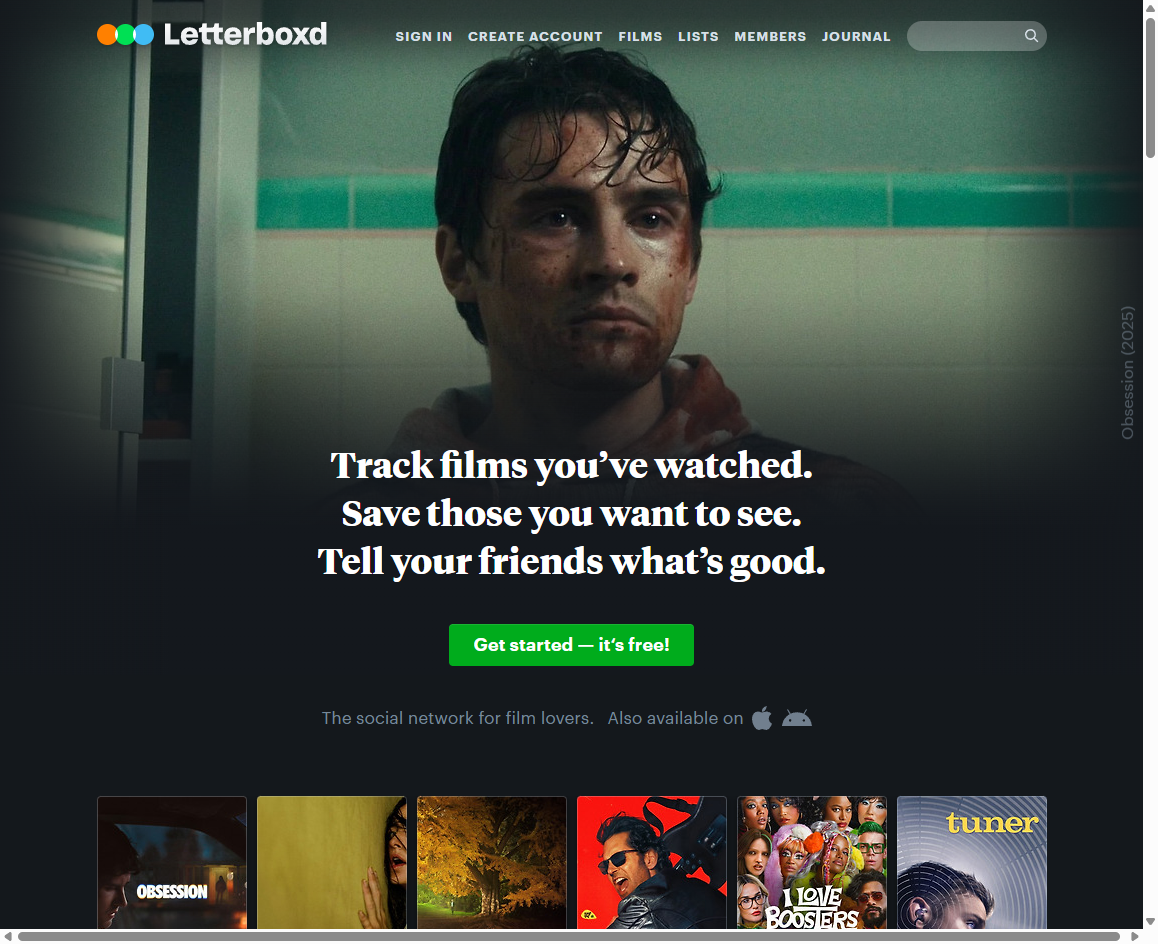
Letterboxd is a social network for film discovery and discussion. On Letterboxd.com, members mark films watched, keep a diary, rate movies, write reviews, make lists, follow friends, browse posters, and compare taste through profiles and activity feeds. The official Letterboxd app is available on the App Store and Google Play.
.svg)

A diary for movies
The core habit is logging what you watch. A diary entry can include the film, watch date, rating, like, review, tags, and spoiler status. Over time, a profile becomes a personal film history: favorite movies, recent watches, ratings, stats, recurring actors, genres, and the messy evidence of changing taste.
Ratings, reviews, and lists
Unlike Rotten Tomatoes or IMDb, Letterboxd is less about one authoritative score and more about many personal records. Short reviews, star ratings, ranked lists, themed collections, tags, likes, and comments all work together. A user might use it as a spreadsheet, a diary, a recommendation engine, or a social identity.
Data and subscriptions
Letterboxd relies on film metadata and offers paid Pro and Patron tiers for features such as advanced stats, filtering, watchlist tools, and an ad-free experience. That mix lets the basic social network stay free while giving heavy users more control over discovery, history, and presentation.
Rise and cultural pull
Letterboxd grew from a niche cinephile tool into a broader cultural signal, especially as movie fans used it during streaming-era discovery and pandemic-era viewing. Its majority acquisition by Tiny gave it resources for growth while keeping the founders involved, a balance many users watch closely because the site's trust depends on its film-fan identity.
Why it matters
Letterboxd matters because it changed how people perform, remember, and share movie taste online. It made film logging feel social, made lists and micro-reviews central to fandom, and gave smaller films a way to spread through personal recommendation rather than only through box office, awards campaigns, or platform algorithms.
WHOIS domain data
Data pulled: May 24, 2026View current WHOIS record
- Domain
- letterboxd.com
- IP address
- 172.66.168.234
- Registrar
- NameCheap, Inc.
- WHOIS server
- whois.namecheap.com
- Referral URL
- http://www.namecheap.com
- Created
- January 4, 2009
- Updated
- December 20, 2022
- Expires
- January 4, 2028
- Nameservers
- isla.ns.cloudflare.com (173.245.58.119); major.ns.cloudflare.com (173.245.59.241)
- Domain status
- clientTransferProhibited
- Registrant contact
- Name redacted for privacy; organization Privacy service provided by Withheld for Privacy ehf; address Reykjavik, Capital Region, IS; phone +354.4212434
- Registrant email
- ee98a60e784e461582295e589043ff67 [dot] protect [at] withheldforprivacy [dot] com
- Admin contact
- Name redacted for privacy; organization Privacy service provided by Withheld for Privacy ehf; address Reykjavik, Capital Region, IS; phone +354.4212434; email ee98a60e784e461582295e589043ff67 [dot] protect [at] withheldforprivacy [dot] com
- Tech contact
- Name redacted for privacy; organization Privacy service provided by Withheld for Privacy ehf; address Reykjavik, Capital Region, IS; phone +354.4212434; email ee98a60e784e461582295e589043ff67 [dot] protect [at] withheldforprivacy [dot] com
Social discovery
Letterboxd turns movie discovery into a social loop. People follow friends, critics, filmmakers, publications, festivals, studios, and strangers with interesting taste. Lists and reviews often travel outside the site as screenshots, jokes, recommendations, and arguments, which helps the platform shape film conversation beyond its own pages.