Wikimedia Commons
Wikimedia Commons is a free media repository where people upload, organize, describe, and reuse openly licensed images, audio, video, diagrams, documents, and other educational media files.
What Wikimedia Commons is
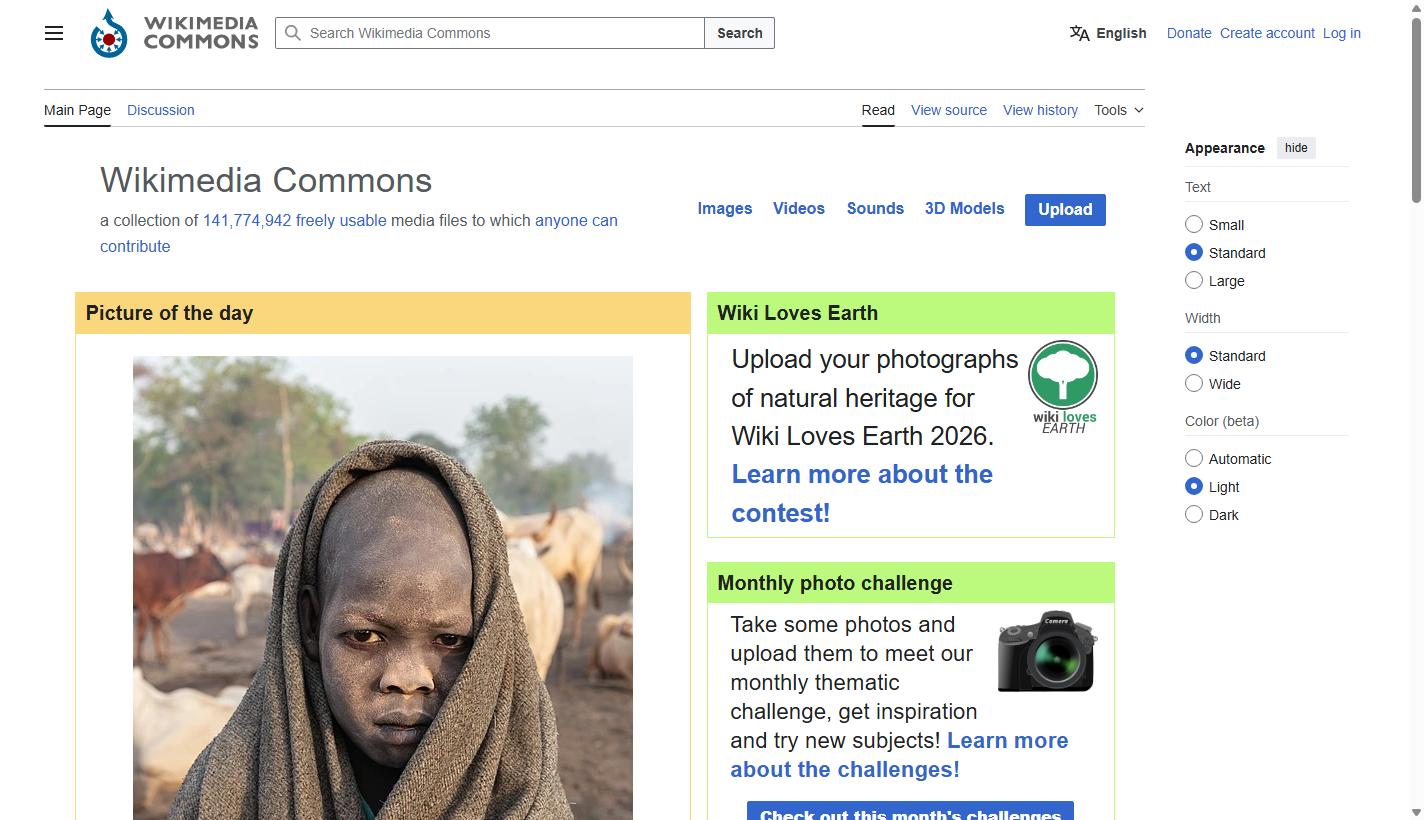
Wikimedia Commons is a free media repository operated in the Wikimedia ecosystem. On Wikimedia Commons, people can search, upload, describe, categorize, and reuse media files such as photographs, diagrams, audio recordings, videos, maps, scans, and illustrations.
Licenses and reuse
The site is centered on reuse. Files are generally accepted when they are public domain or released under a free license that allows copying, modification, and redistribution. That does not mean every file is free of responsibilities: reusers often need to credit creators, preserve license notices, and check local laws about trademarks, privacy, or personality rights.
Categories, captions, and metadata
A useful Commons file is more than an image or recording. It also needs a title, description, date, author, source, license, categories, captions, and sometimes structured data. Those details help people find the file, understand what it shows, and reuse it responsibly.
Community review
Volunteers patrol uploads, improve descriptions, nominate images, debate deletion requests, identify copyright problems, translate captions, and organize categories. This makes Commons both a repository and a governance system for media, where legal clarity and educational usefulness have to be argued file by file.
Strengths and limits
Commons is powerful because it gives educators, journalists, students, developers, and volunteers a large pool of reusable media. Its limits are familiar to open projects: uneven descriptions, complex licensing, cultural disputes, low-quality uploads, missing context, and confusion between โ€free to reuseโ€ and โ€free to use without conditions.โ€
Why it matters
Wikimedia Commons helps keep visual and audio knowledge from being locked inside private platforms or single publications. By making reusable media searchable and connected to public knowledge projects, it supports teaching, research, documentation, translation, accessibility, and preservation.