Wiktionary
Wiktionary is a Wikimedia dictionary website where volunteers build multilingual entries with definitions, pronunciations, etymologies, translations, quotations, usage notes, and related lexical information.
What Wiktionary is
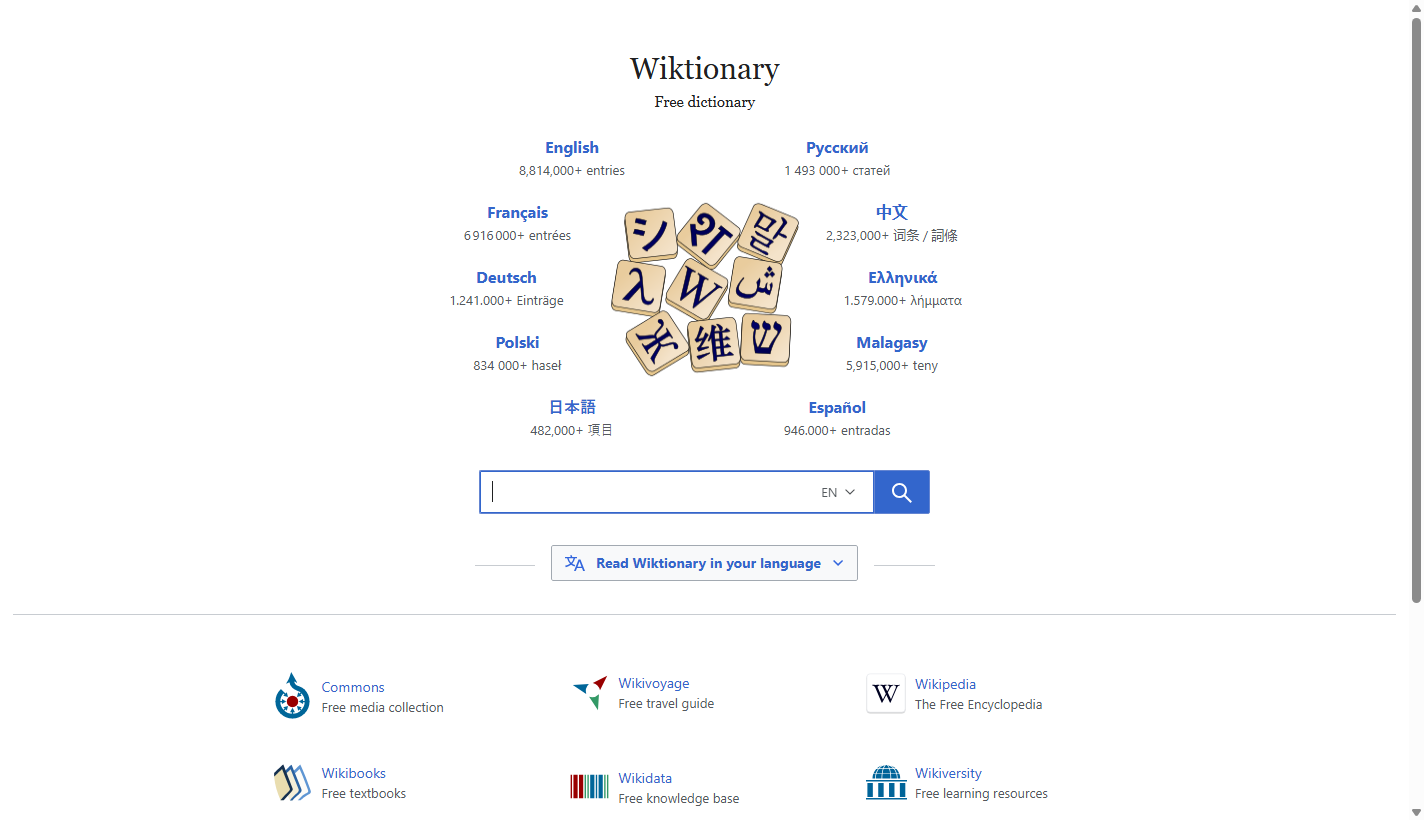
Wiktionary is a free dictionary website in the Wikimedia family. On Wiktionary.org, readers can search across language editions and find entries that explain words, phrases, pronunciations, spellings, etymologies, translations, usage notes, and related forms.
Dictionary plus language record
A Wiktionary entry can go beyond a short definition. Depending on the word, it may include pronunciation, part of speech, inflection, etymology, derived terms, related terms, synonyms, antonyms, translations, usage labels, quotations, and notes about spelling or dialect. That makes the site part dictionary, part language archive, and part editing community.
Multilingual by design
Wiktionary is split into language editions, but each edition can document words from many languages. The English Wiktionary, for example, explains words from many languages in English. Other editions explain lexical material in their own interface and explanation language, creating a network of dictionaries rather than one single database.
How editing works
Like Wikipedia, Wiktionary uses wiki editing, page histories, talk pages, templates, categories, and community rules. Its work is different, though: editors must decide how to structure entries, cite usage, separate homographs, mark parts of speech, format translations, and follow inclusion criteria for words, phrases, and names.
Evidence and descriptivism
Wiktionary tends to describe how words are used rather than prescribe how they should be used. Strong entries often depend on evidence from quotations, attested usage, historical forms, and language-specific knowledge. This makes the site useful, but also uneven: some entries are deeply developed while others remain sparse or need cleanup.
Relationship to Wikipedia
Wiktionary was designed as a lexical companion to Wikipedia. Wikipedia explains topics; Wiktionary explains words and phrases. The boundary is important: a page about a country, person, or technology belongs in an encyclopedia, while a page about the word, spelling, pronunciation, or translation belongs in a dictionary.
Why it matters
Wiktionary matters because language reference is usually expensive, proprietary, or limited by one publisherโ€s editorial choices. A multilingual, openly licensed dictionary gives learners, translators, researchers, developers, and curious readers a public place to inspect how words work across languages.
WHOIS domain data
Data pulled: May 24, 2026View current WHOIS record
- Domain
- wiktionary.org
- IP address
- 208.80.154.224
- Registrar
- MarkMonitor Inc.
- WHOIS server
- whois.markmonitor.com
- Referral URL
- http://www.markmonitor.com
- Created
- December 14, 2002
- Updated
- November 12, 2025
- Expires
- December 14, 2026
- Nameservers
- ns0.wikimedia.org (208.80.154.238); ns1.wikimedia.org (208.80.153.231); ns2.wikimedia.org (198.35.27.27)
- Domain status
- clientDeleteProhibited; clientTransferProhibited; clientUpdateProhibited
- Registrant organization
- Wikimedia Foundation, Inc.
- Registrant country
- US
- Registrant email
- Select Request Email Form at https://domains [dot] markmonitor [dot] com/whois/wiktionary [dot] org
- Tech email
- Select Request Email Form at https://domains [dot] markmonitor [dot] com/whois/wiktionary [dot] org
- DNSSEC
- unsigned