Wrike
Wrike is a popular work management website for project planning, collaboration, dashboards, automation, resource visibility, and enterprise team workflows.
What Wrike is
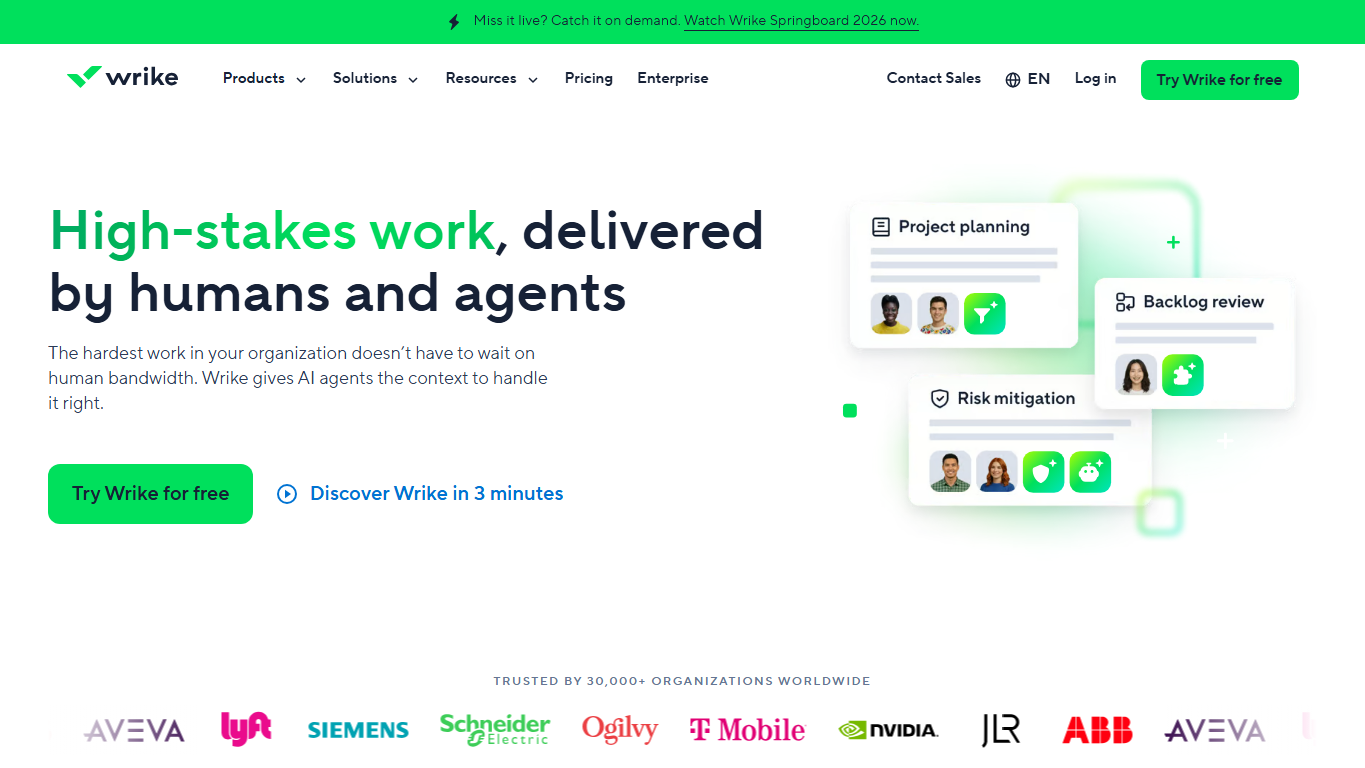
wrike.com is the official website for Wrike, a work management platform for project planning, team collaboration, workflow automation, dashboards, and enterprise visibility. The site explains Wrike's features, pricing, solutions, resources, integrations, customer stories, and account access. Teams often compare Wrike with project management tools, spreadsheet trackers, portfolio platforms, and collaboration workspaces.
Projects and tasks
Wrike organizes work through spaces, folders, projects, tasks, subtasks, statuses, assignees, due dates, comments, files, and custom workflows. This structure supports everyday project tracking as well as larger programs with many contributors. Teams can use Wrike to manage campaign calendars, product launches, creative requests, client delivery, operational processes, and cross-functional initiatives.
Views and dashboards
Wrike offers different ways to view the same work, such as lists, boards, tables, calendars, Gantt-style timelines, workload views, and dashboards. These views matter because executives, project managers, designers, marketers, and operators often need different levels of detail. A dashboard can summarize progress, blockers, overdue work, workload, or project health without requiring every stakeholder to inspect every task.
Automation and approvals
Wrike can support repeatable workflows through request forms, approvals, task routing, notifications, status changes, and automation rules. This is useful when teams receive many similar requests or need formal review steps for creative assets, marketing work, legal reviews, or client deliverables. Automation works best when the workflow is already clear enough to encode into rules.
Enterprise work management
Wrike is often aimed at larger teams that need visibility across departments. Enterprise-oriented use can include permissions, reporting, administration, integrations, resource planning, security controls, and standardized workflows. Those capabilities make Wrike relevant to marketing organizations, professional services teams, product groups, project management offices, and operations leaders who need more than a simple task list.
Who uses Wrike
Wrike is used by project managers, marketing teams, creative teams, agencies, operations teams, product teams, professional services groups, executives, and enterprise program managers. Smaller teams may use it to coordinate projects and approvals, while larger organizations may use it to standardize work intake, connect departments, and report on portfolios of work.
Pricing and setup choices
Wrike pricing depends on plan, user count, billing term, workflow needs, dashboards, automation, proofing, resource management, integrations, security, and support. Teams should check the official pricing page before deciding because packaging can change. A useful evaluation should include a real request form, a real approval workflow, a dashboard, and enough users to test handoffs.
Strengths and cautions
Wrike's strength is structure: it can help teams move from informal coordination to repeatable project workflows and measurable reporting. The caution is that enterprise work management can become complex if teams overbuild custom fields, workflows, and dashboards before agreeing on the process. Clear ownership and governance make the platform easier to maintain.
Why it matters
Work management platforms matter because organizations often run important work across scattered meetings, spreadsheets, email threads, and chat messages. Wrike gives teams a shared place for plans, updates, files, approvals, and reporting. When used well, it can make cross-functional work more visible and reduce the overhead of asking for status updates.
WHOIS domain data
Data pulled: May 20, 2026View current WHOIS record
- Domain
- wrike.com
- IP address
- 104.18.42.136
- Registrar
- Gandi SAS
- WHOIS server
- whois.gandi.net
- Referral URL
- http://www.gandi.net
- Created
- October 15, 2005
- Updated
- September 14, 2025
- Expires
- October 15, 2026
- Nameservers
- wells.ns.cloudflare.com (162.159.44.125); dahlia.ns.cloudflare.com (172.64.32.89)
- Domain status
- clientTransferProhibited
- DNSSEC
- unsigned
- Registrant organization
- Wrike, Inc.
- Registrant country
- US
- Contact privacy
- Registrant, admin, and technical contact details are partly redacted for privacy in the visible WHOIS record.
- Source
- https://who.is/whois/wrike.com